
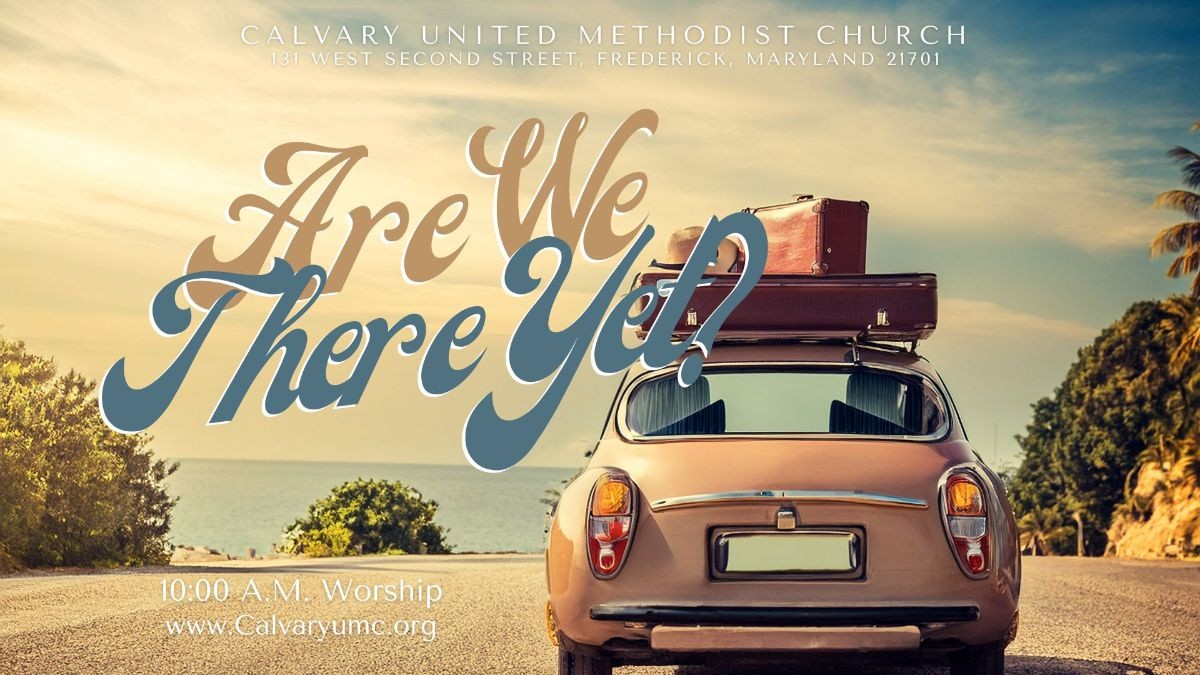
Happy Father’s Day Weekend
Happy Father’s Day weekend to the dads, the granddads, the stepdads, the father figures, and everyone who has loved and shaped a child along the way. We know this day lands differently depending on what you carry, gratitude for some, tenderness or grief for others. Wherever you find yourself, you are seen and you are loved here.
It is a fitting weekend to keep traveling with our “Are We There Yet?” series, our summer road trip with Abraham and Sarah. This Sunday we come to Genesis 21:8-21, a hard and holy stretch of the journey. It is the story of Hagar and Ishmael sent out into the wilderness, a father’s painful choice, a mother’s anguish, and a child whose life seems all but lost. And right there, in the most desolate place, God hears the boy crying and does not abandon him. It is a story about the families that are complicated, the roads that get rocky, and a God who sees and provides even in the wilderness. If you have ever felt cast out or run dry, this one is for you. Come join us on the road. We are saving you a seat.
 Between Sundays
“The Spirit of the Lord is upon me, because he has anointed me to bring good news to the poor. He has sent me to proclaim release to the captives and recovery of sight to the blind, to let the oppressed go free.” — Luke 4:18
At this point in our history, I think we can all agree that slavery is wrong.
What is harder to sit with is that slavery has not actually gone away. Human trafficking and forced labor are still a reality. So as we mark a holiday that is still new for some of us, I want us to come at it with open eyes. Juneteenth gives us a chance to tell the truth about where this nation has been, and to honor the people who kept reaching for freedom even when it was held back from them.
Let me tell you how this holiday connects to my own ministry.
Years ago, while I was finishing my Master’s, I had to take a consortium class at another seminary. We were living here in Frederick and I still had little ones at home, so I picked the Lutheran seminary up the road in Gettysburg. The class was a two-week January intensive called “Pastoral Care in the Gettysburg Experience,” and for me it was the perfect meeting point of theology, pastoral practice, and history.
For my project I built something I could actually use. It was a confirmation experience that brought young people to Gettysburg to learn some American history and, more than that, to see the use and abuse of scripture up close. It became part of my confirmation curriculum for years. The questions underneath it were simple ones. What happens when we get scripture wrong? What do we do with the harmful ways other people read it? And how do we prepare our kids for the hurt those readings can cause? Getting to the root of a problem before it becomes a problem, that is pastoral care too.
So I studied the visitor center museum, picked out specific exhibits, and built a whole day on the battlefield that I could walk my confirmation classes through. One exhibit was required listening. It was a set of recordings of Civil War era campaign speeches, and it showed my students the use and abuse of scripture better than any lecture I could have given. They heard the Democrats of the 1850s reach for Paul, his words about slaves and masters, to defend the practice. Then they heard the Republicans answer back with the teachings of Jesus. (Remember, the parties of the 1850s look almost nothing like the parties that carry those names today.)
That was the lesson. Right there in their headphones, my confirmands could hear the same book used as a weapon and used as freedom, pulled in opposite directions by people who all said God was on their side. I wanted them to hear it for themselves, so they would be ready for the places where scripture still gets twisted today.
And that twisting was never just an old argument on a recording. It helped keep an entire people in chains for generations. That is what Juneteenth asks us to remember. For anyone hearing the story for the first time, here is what we mark. On June 19, 1865, Union soldiers rode into Galveston, Texas, and told the enslaved people there they were free. That word came two and a half years after the Emancipation Proclamation had already established their freedom. The freedom was real on paper, but around 250,000 people in Texas were kept in slavery for two more years, never told, or never able to claim it. Juneteenth, June and nineteenth put together, is the day that freedom finally got to them. Black communities have honored it for generations. It only became a federal holiday in 2021.
That is why I want us to observe it. A freedom announced but never delivered, kept from the very people who needed it most, is what happens when we let the whole story go untold. Telling all of it is how we keep scripture and history from ever being twisted to hold someone down again.
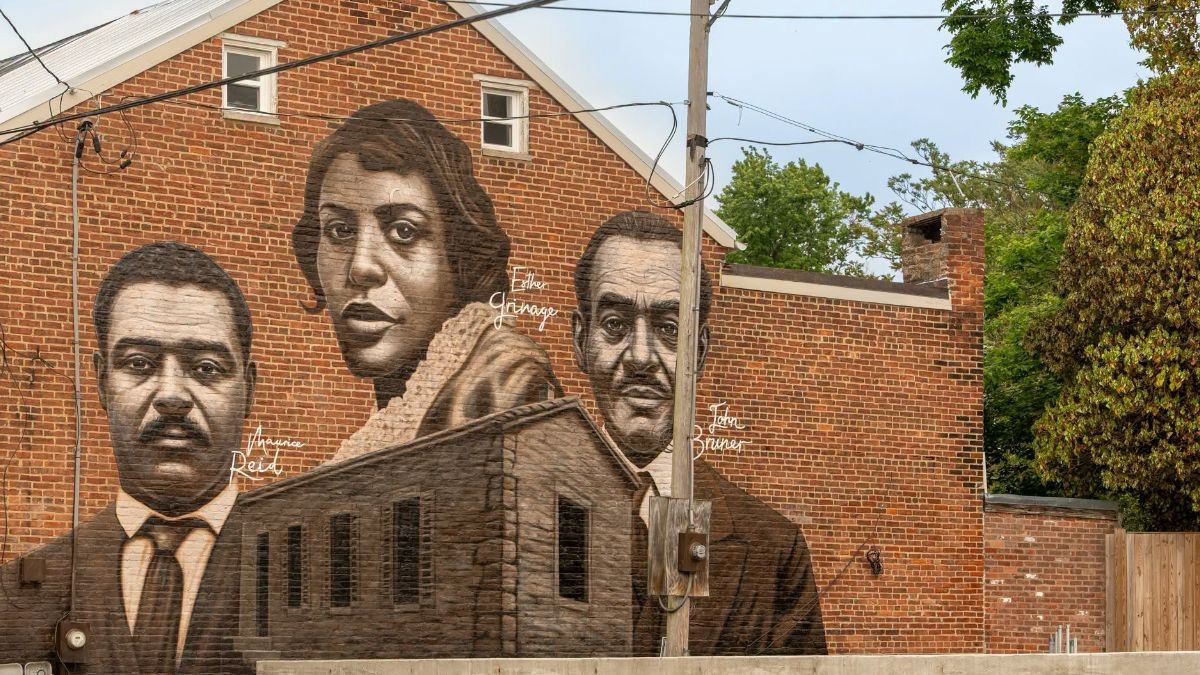
The same lesson my confirmands learned in those headphones holds for the rest of us. The whole story has to be told, or somebody gets written out of it. Most of us can’t drop everything and be downtown this morning, and that is alright. A day like this was never really about one event anyway. It is about doing the work. So take some time this week to learn the history of our own community. The people who built it, the barriers they broke, the names we should know and somehow never learned. Read something. Ask someone. Honor the courage that carried freedom forward even when it was denied. That is how we keep a day like this, not by showing up once, but by refusing to look away from the rest of the story.
Freedom sits at the very center of our faith. Jesus stood up in his home synagogue, opened the scroll, and said he had come to set the oppressed free. May we be people who read that scroll right, and who live like we mean it.
Until Sunday, and all the days between,
Dr. Hutton